



This post was published by Jon Fleetwood. Support him by subscribing at Substack and following at Instagram / X / Facebook.

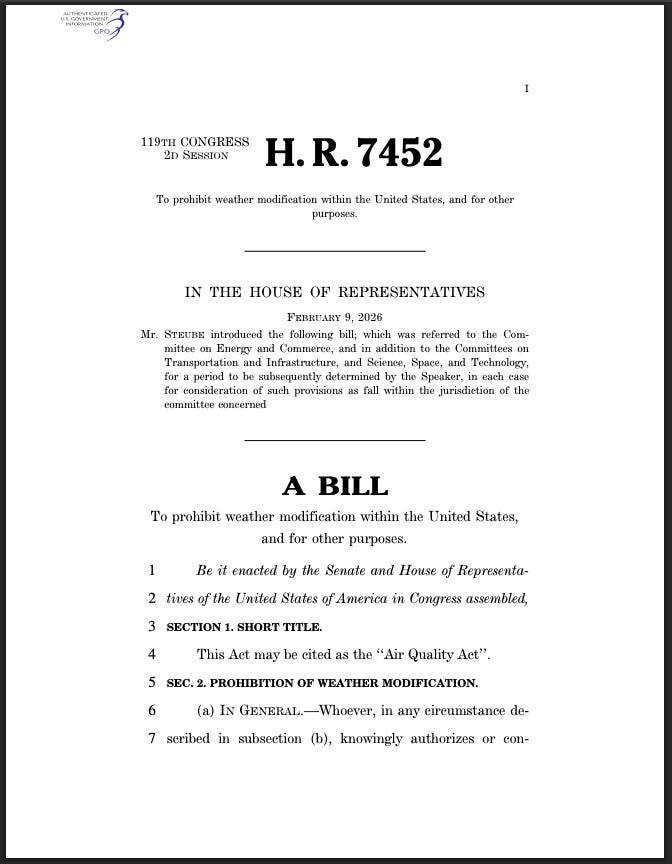
Last month, Congress introduced legislation that would impose a nationwide ban on geoengineering and atmospheric weather modification, criminalizing activities such as aerosol spraying, cloud seeding, solar radiation management, and other atmospheric interventions designed to alter weather or climate conditions.
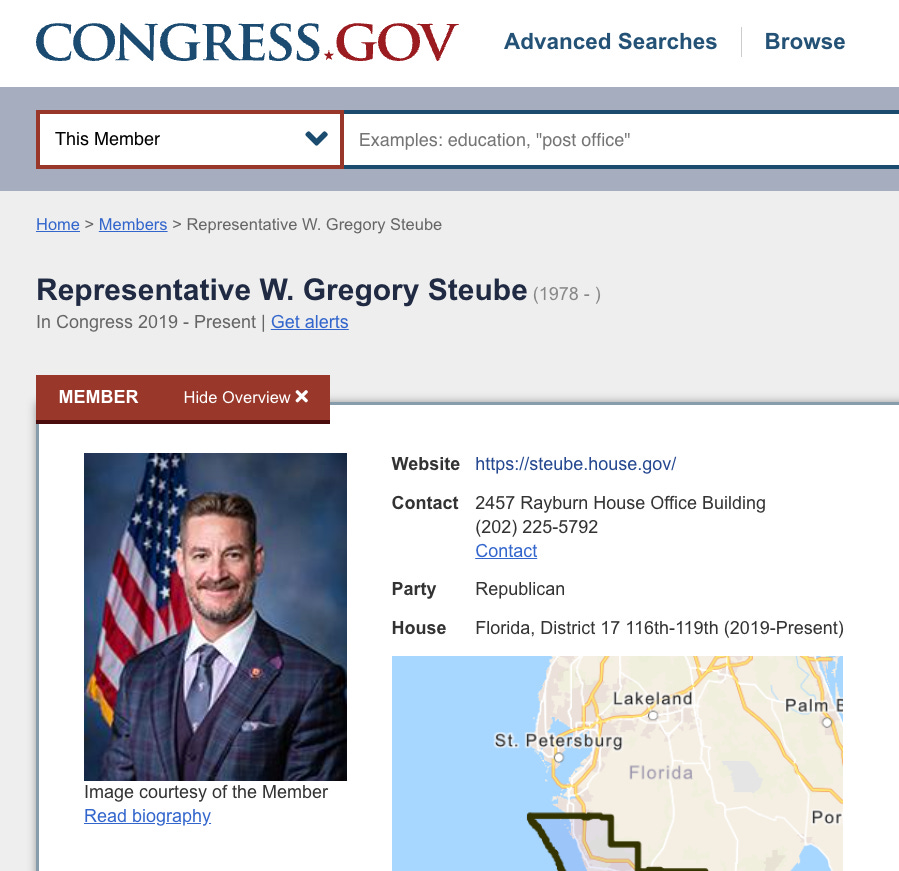
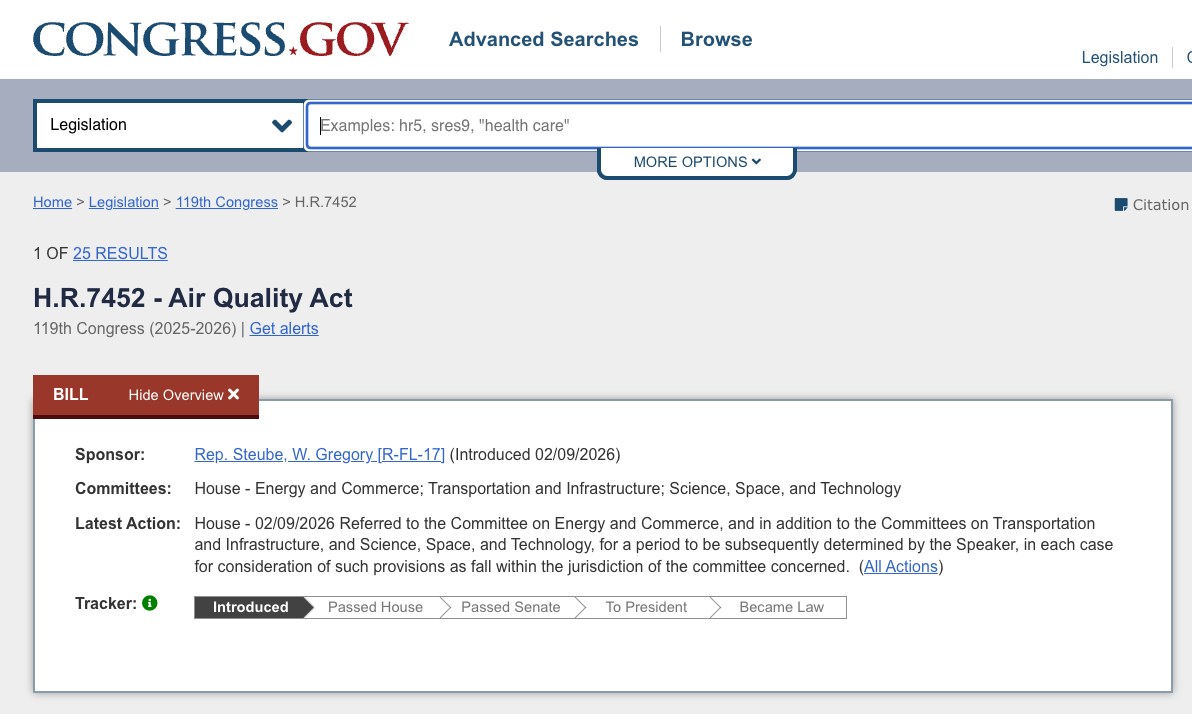
The bill, H.R. 7452, titled the Air Quality Act, was introduced February 9 by U.S. Representative Greg Steube (R-FL) and referred to the House Committees on Energy and Commerce, Transportation and Infrastructure, and Science, Space, and Technology.
You can find your Representative here and voice your support for the bill.
If enacted, the legislation would prohibit the injection, release, emission, or dispersal of chemical or biological substances into the atmosphere to alter atmospheric behavior, weather, climate, or sunlight intensity, establishing criminal penalties for individuals or organizations involved in such activities.
The bill states: “Whoever… knowingly authorizes or conducts weather modification in the United States shall be subject to the penalties described.”
Violators could face criminal fines of up to $100,000 per violation, imprisonment for up to five years, or both, along with civil penalties of up to $10,000 imposed by federal regulators.
The legislation also specifies that each individual injection, release, emission, or dispersal would constitute a separate violation, potentially multiplying penalties for repeated operations.
If enacted, the legislation would take effect 90 days after passage, triggering the nationwide prohibition on geoengineering and atmospheric weather modification activities.
However, because the statute applies only to activities conducted “knowingly” as weather modification, enforcement would require proving that the atmospheric release was carried out as a weather-altering program—leaving unresolved how the law would apply to metal nanoparticle- and sulfur-laced aircraft emissions that federal aviation and atmospheric agencies acknowledge can linger, spread, and form cloud cover that affects sunlight (more on this below).
Bill Places Geoengineering Technologies Into Federal Statute
The legislation explicitly defines several geoengineering technologies that would fall under the federal prohibition.
These include:
- Geoengineering
- Cloud seeding
- Solar radiation modification
- Stratospheric aerosol injection
- Marine cloud brightening
The bill defines stratospheric aerosol injection as a strategy designed to increase reflective particles in the stratosphere to reflect sunlight back into space, while marine cloud brightening involves adding aerosols over ocean regions to increase cloud reflectivity.
Cloud seeding is defined as altering the processes of a cloud or storm by releasing substances into the atmosphere.
More broadly, the legislation defines weather modification as: “any injection, release, emission, or dispersal of a chemical substance, a biological agent, or an air pollutant… into the atmosphere” that changes atmospheric composition or behavior or affects weather, climate, or sunlight intensity.
By explicitly naming these technologies and atmospheric dispersal mechanisms in statutory language, the legislation places geoengineering concepts directly into the legal framework governing atmospheric intervention.
Bill Requires ‘Knowingly’ Conducting Weather Modification
The bill does not use the word “intentional,” which appears in several recent state geoengineering bans.
However, it still requires that a person “knowingly authorizes or conducts weather modification.”
Because of this requirement, enforcement would involve demonstrating that an individual or organization understood they were carrying out weather modification activities as defined by the law.
The statute also requires that the activity involve a release or dispersal of substances into the atmosphere that produces a change in atmospheric composition or behavior or affects weather, climate, or sunlight.
Will the Bill Work?
As written, the law targets activities conducted as weather modification programs, rather than every circumstance in which aircraft emissions or atmospheric particles might linger, disperse, or form clouds.
It is true that explicitly intentional weather modification activities do exist.
In June 2023, the White House Office of Science and Technology Policy (OSTP) released a congressionally mandated report suggesting that both global and regional intentional geoengineering projects are being carried out “covertly,” without citizens’ knowledge.
Page 43 of the document confirms the U.S. government “conducts or funds limited research into solar radiation modification.”
There are also small-scale, explicitly intentional weather-modifying projects like Augustus Doricko’s Rainmaker operation, which uses drones to release silver iodide into clouds.
However, the vast majority of weather-modifying aircraft emissions come from commercial aircraft, according to top U.S. agencies.
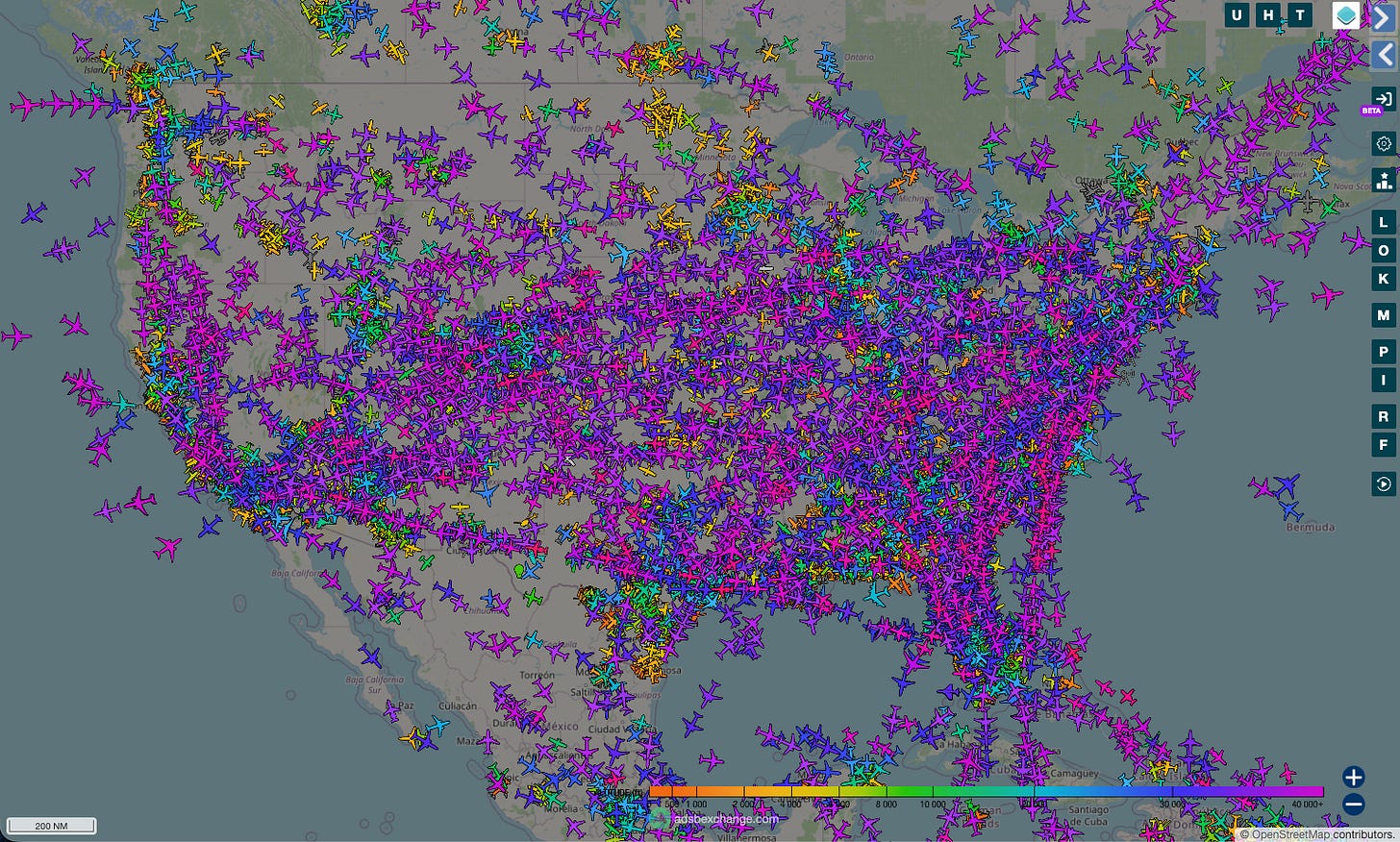
On any given day, around 3,500 to 5,500 commercial flights are typically airborne over the U.S. airspace at any moment.
The FAA, NASA, and NOAA have officially and explicitly confirmed in print that jet airplanes—including commercial jets—create emissions that linger in the sky and alter the weather.
- These metal nanoparticle- and sulfur-laced contrails from jets “form in ice supersaturated regions of the atmosphere and can last for hours to days,” according to the three U.S. agencies.
- They “are characterized by their tendency to widen and spread, eventually covering areas that can span several hundred kilometers.”
- Because of their long lifespan and massive coverage area, these jet emissions are “likely to have the most significant impact on the atmosphere.”
- The government openly states that “contrail cirrus can be difficult to distinguish from naturally occurring cirrus clouds.”
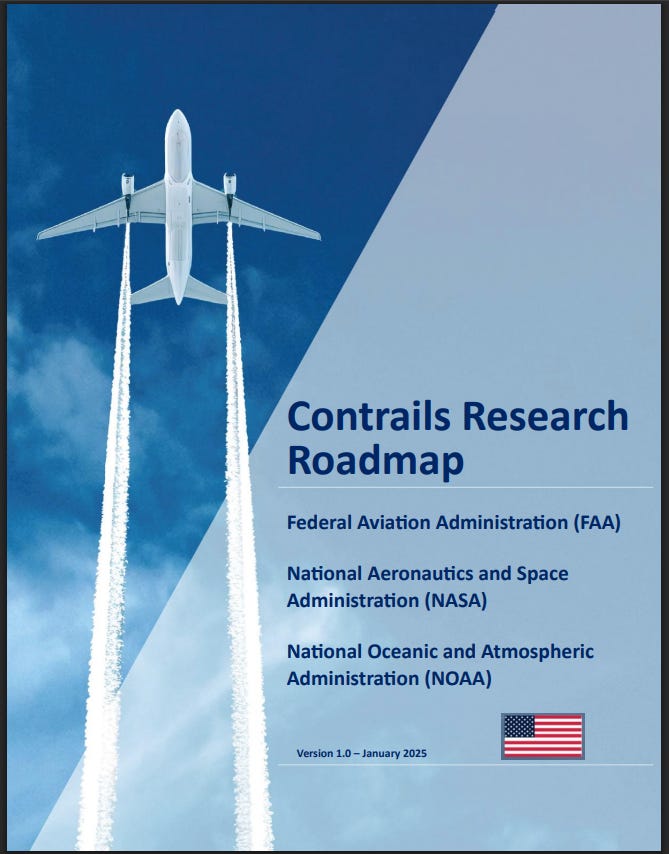
But airlines do not state that they are “knowingly” using their weather-modifying emissions that alter the weather for that reason.
All opponents of geoengineering and aircraft-induced sun- and sky-blocking will likely welcome the legislation because it bans geoengineering conducted “knowingly,” but in its current form, it does not explicitly target the federally confirmed cause of large-scale weather manipulation already underway.
Aircraft Monitoring & Public Reporting Systems Created
The legislation also directs federal agencies to establish systems designed to identify possible weather modification activity.
Under the bill, the Federal Aviation Administration must create a reporting system allowing air carriers to report the location and movement of aircraft equipped with components capable of supporting weather modification.
Those reports would be made publicly available.
The Environmental Protection Agency would also create a public reporting portal allowing individuals to report suspected weather modification activity, which the agency would investigate.
If violations are confirmed, the EPA would refer cases to the U.S. Department of Justice for enforcement action.
Existing Federal Authority for Weather Modification Would Be Repealed
One of the bill’s most sweeping provisions would repeal any federal statutes, regulations, executive orders, or licensing systems that authorize weather modification activities.
The legislation states: “Any provision of a Federal statute authorizing or requiring weather modification… is hereby repealed.”
It further declares that any federal regulations or executive orders authorizing such activities “shall have no force or effect.”
If enacted, this provision would eliminate any existing federal authority allowing weather modification programs.
Federal Research & Experiments Would Also Be Banned
The legislation would also prohibit federal agencies and federally funded institutions from conducting research or experiments involving weather modification.
The bill states: “no Federal department or agency, or any recipient of Federal funds, may authorize or conduct any research, testing, or experimentation that constitutes weather modification.”
The restriction would apply to government laboratories, universities, contractors, and other organizations receiving federal funding.
Bottom Line
H.R. 7452 would create the first sweeping federal prohibition on geoengineering and atmospheric weather modification, criminalizing aerosol injection and other technologies designed to deliberately alter weather or sunlight while simultaneously repealing any federal statutes, regulations, or permits that authorize such activities.
At the same time, because the law applies only to activities carried out “knowingly” as weather modification, the bill primarily targets explicit geoengineering programs rather than every instance in which aircraft emissions or atmospheric particles linger, disperse, and form cloud cover that affects sunlight.
If enacted, the legislation would both place geoengineering technologies into federal statute and attempt to shut down intentional weather modification programs nationwide—while leaving unresolved questions about how broadly the prohibition would apply to atmospheric effects produced by commercial aviation activity.
Your support is crucial in helping us defeat mass censorship. Please consider donating via Locals or check out our unique merch. Follow us on X @ModernityNews.
More news on our radar
