



Research has found that the Covid pandemic and months of draconian lockdowns likely inflicted long-term harm on children’s brain development, hampering their ability to regulate behavior, stay focused, and adapt to new situations—skills collectively known as executive functions.
A new study led by the University of East Anglia highlights the greatest impact on pupils in reception, aged four to five, when the first lockdowns hit in March 2020—a critical stage for learning to socialize, follow routines, and navigate classroom life. Instead, millions of youngsters were trapped at home, subjected to online “learning” or parental teaching amid widespread government mandates.
These children, now around 10 to 11 in their final year of primary school, showed less growth in self-regulatory and cognitive flexibility scores over time compared to a group who were in preschool during the initial outbreak, according to the research published in the journal Child Development.
The Covid lockdowns may have inflicted long-term harm on children's brain development, an alarming new study has found. https://t.co/vlBIJqztEW
— Toby Young (@toadmeister) March 4, 2026
Researchers from the University of East Anglia, along with some from Lancaster University, and Durham University tracked 139 children aged between two-and-a-half and six-and-a-half over several years, with baseline data from before Covid allowing precise measurement of how development stalled.
Using the Minnesota Executive Function Scale, they assessed cognitive skills at regular intervals. Lead researcher Prof John Spencer from UEA’s School of Psychology said: “Children who were in reception when the country shut down showed much slower growth in key self-regulation and cognitive flexibility skills over the next few years than children who were still in preschool.”
“Reception is a critical year for peer socialisation. It’s when children learn classroom norms and build early friendships that shape their confidence,” Spencer added.
Children’s development set back years by Covid lockdowns, study reveals
— Benjamin Ryan (@benryanwriter) March 4, 2026
The Covid pandemic disrupted children’s ability to self-regulate – according to new research from the University of East Anglia.
A new study reveals that the pandemic hampered children’s ability to regulate… pic.twitter.com/XYhnXD0JZo
For this cohort starting school in 2020, classrooms shuttered, routines collapsed, and social interactions were severely restricted under heavy-handed policies. “Without these experiences, children’s self-regulatory skills didn’t develop as quickly year-on-year after the lockdowns ended,” Spencer further noted.
Many in this group also suffered repeated Covid infections, potentially compounding the damage from isolation. “Our findings suggest that peer socialisation and the new self–regulatory skills children must master in reception might be particularly critical for the development of executive function skills,” the researchers stated.
“Without these experiences, reception children had a challenging time developing self–regulation and cognitive flexibility in the years that followed the pandemic,” the study adds.
The research underscores how top-down government interventions disrupted natural childhood milestones, with effects lingering years later. It calls for more support from teachers, schools, and health services for this affected generation, while raising red flags about safeguarding kids in future “emergencies.”
A 2023 report by Speech and Language UK revealed the average child missed 84 school days due to Covid policies. Eight in ten teachers reported worsened pupil inattention post-pandemic, blaming screen-based “learning” and stunted social skills.
Teachers have also noted rises in needless chatter, shouting, and inappropriate laughing, with the “ever-swiping nature” of social media like TikTok worsening the fallout.
Previous research showed teenage girls’ brains aged prematurely by up to four years during lockdowns, with boys affected by one-and-a-half years—linked to social restrictions hitting girls harder.
Covid lockdowns rapidly aged girls’ brain by 4.2 years compared to 1.4 among boys.
— AF Post (@AFpost) September 10, 2024
Follow: @AFpost pic.twitter.com/9kT18beXBM
University of Washington researchers compared MRI scans from 2018 to post-pandemic ones in 2021-2022, finding accelerated cortical thinning, a natural process tied to anxiety, stress, and higher disorder risks. Whether this is permanent remains unclear, but it spotlights the unseen toll of isolating youth.
This latest warning adds to a mountain of evidence exposing lockdowns as a disastrous overreach that prioritized control over common sense, devastating children’s futures.
A previous study highlighted how lockdowns drove 60,000 children in the UK to clinical depression, with the enforced isolation sparking widespread mental health crises among youth that required professional intervention.
Another investigation revealed that babies born during lockdown were less likely to speak before their first birthday, as the lack of face-to-face interactions and exposure to facial expressions hindered early language acquisition.
Babies born in lockdown were less likely to have said their first word by the time they turned one ? Lockdowns and mask mandates stunted babies' development: They weren't able to socialize or read facial expressions, study warns! ?
— CyberChick (@warriors_mom) October 12, 2022
Daily Mail Online https://t.co/v2XtsXaDim
A further study found many children unable to say their own name due to the impact of lockdown, pointing to profound speech and developmental delays from limited social engagement.
'Children learn by watching people, by watching lips, by seeing faces. No only did we lock them at home, we put masks on the people around them.'
— GB News (@GBNEWS) November 8, 2022
NHS GP Dr Renee Hoenderkamp discusses more children needing help with speech after lockdown isolation. pic.twitter.com/BPXStRrXZF
Research also uncovered that children were suffering from as many as three different viruses simultaneously due to weakened immunity caused by lockdown, since prolonged indoor confinement prevented the natural building of defenses against common pathogens.
June 2022: “Children were admitted…with a startling range of 7 viruses. They had adenovirus, rhinovirus, RSV, human metapneumovirus, influenza & parainfluenza, as well as Covid—which many specialists say is to blame for the unusual surges.” https://t.co/ZdBhe3z7xu
— Laura Miers (@LauraMiers) March 12, 2023
In addition, an outbreak of hepatitis in children was directly attributed to lockdowns that weakened immunity, resulting in unexpected surges of the liver condition among previously healthy kids.
Doctors also raised alarms over a mysterious outbreak of brain infections in Nevada kids, believing it was linked to COVID lockdowns that left children’s immune systems vulnerable and unprepared for routine exposures.
NEW — The CDC is Investigating an Alarming Cluster of Mysterious Brain Infections in Children in Nevada
— Chief Nerd (@TheChiefNerd) April 29, 2023
“Before COVID they were seeing about 4 cases/year of brain abscesses in children. When they looked in 2022 it was 18.” pic.twitter.com/JdZkRTc71W
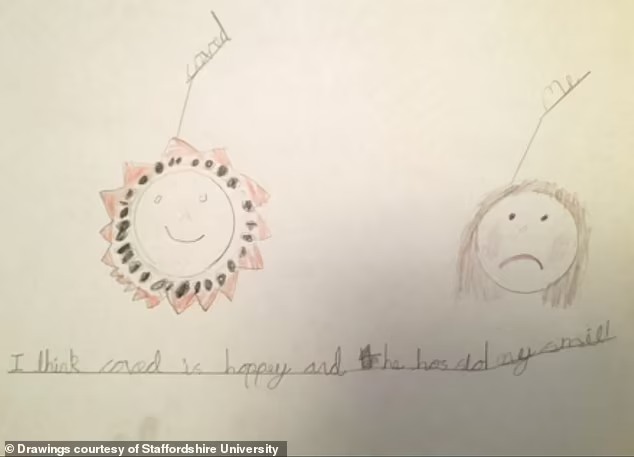
Disturbing lockdown drawings also illustrated the severe effect on children’s mental health, where artwork captured the trauma, fear, and emotional distress from being cut off from normal life.
The harrowing pictures drawn by children in lockdown https://t.co/P9XIoJRJmY
— Daily Mail (@DailyMail) January 7, 2023

These findings, among others like excess deaths and ignored warnings, paint a picture of policy failure. Lockdown zealots dismissed the collateral damage, but the data doesn’t lie—government mandates crushed freedom and futures alike.
Never again should bureaucrats be allowed to play god with our kids’ lives. Prioritizing liberty and evidence over fear is the only way to protect the next generation from such needless harm.
Your support is crucial in helping us defeat mass censorship. Please consider donating via Locals or check out our unique merch. Follow us on X @ModernityNews.
More news on our radar
