



This post was published by Jon Fleetwood. Support him by subscribing at Substack and following at Instagram / X / Facebook.

Congress has introduced legislation that would place genetic engineering and synthetic biology technologies into NATO’s classified military planning structure, authorizing the alliance to “research, develop, and deploy biotechnology” under a new international biodefense framework governing tools the bill itself states could enable the development of bioweapons.
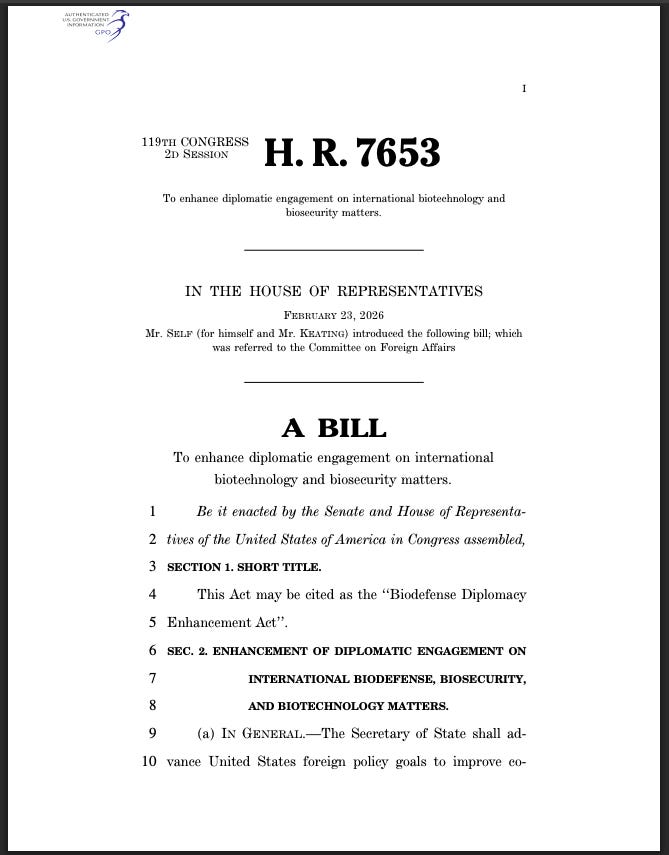
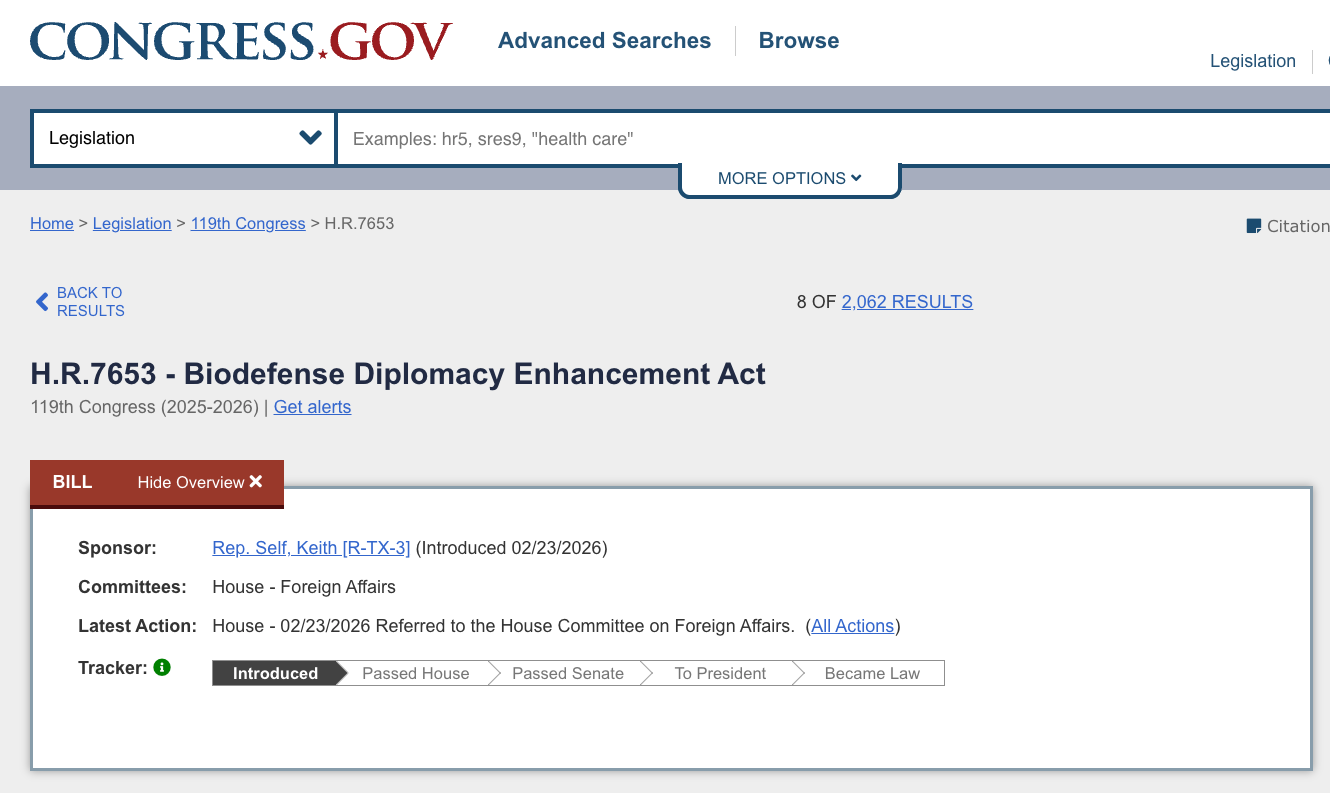
The bill, H.R. 7653, titled the Biodefense Diplomacy Enhancement Act, was introduced last week by U.S. Representative Keith Self (R-TX) and referred to the House Foreign Affairs Committee.
You can see Rep. Self’s top campaign contributors here, which include major U.S. military defense contractors Lockheed Martin, RTX (Raytheon), L3Harris Technologies, and Boeing—companies that operate extensively in military biodefense, biosurveillance, and biological threat detection programs.
If enacted, the legislation would formally move the technologies used to genetically engineer biological organisms into NATO’s coordinated defense infrastructure, where their development, deployment, and control would be governed through military and diplomatic channels.
This legislation comes as Congress, the White House, the Department of Energy, the FBI, the CIA, and Germany’s Federal Intelligence Service (BND) have confirmed that the COVID-19 pandemic was likely the result of lab-engineered pathogen manipulation, placing increased scrutiny on the genetic engineering technologies addressed in the bill.
At the center of the legislation is a directive ordering U.S. officials to pursue: “evaluating opportunities for expanded NATO capabilities to research, develop, and deploy biotechnology for international security purposes.”
The bill explicitly defines biotechnology to include: “genetic engineering, synthetic biology, and bioinformatics.”
These technologies allow scientists to modify organisms at the genetic level, including altering existing biological systems or constructing new ones.
By authorizing NATO to develop and deploy these capabilities, the legislation integrates biological engineering technologies into the alliance’s operational planning structure under the bill’s stated justification of addressing biological threats.
The legislation directly links its biotechnology provisions to technologies capable of being used to create biological weapons.
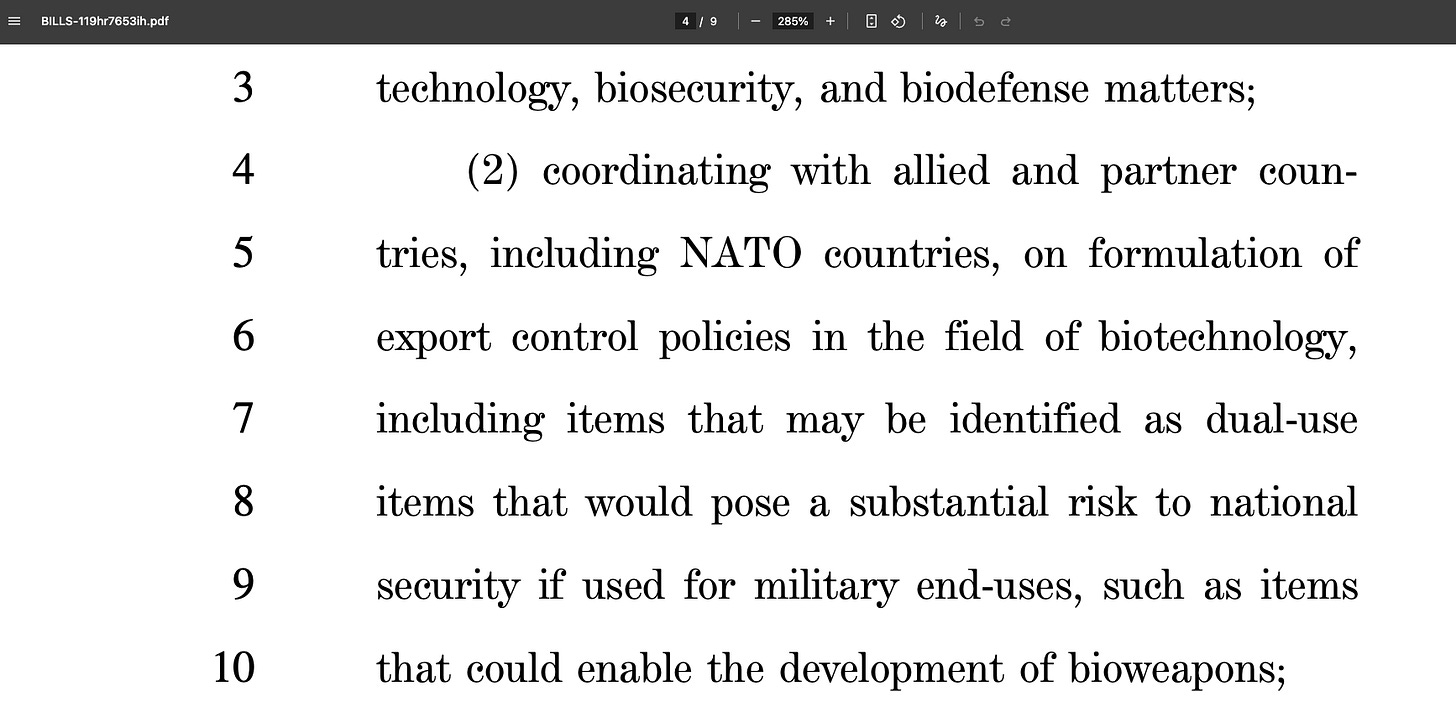
It orders coordination with allied nations on export controls governing: “items that may be identified as dual-use items that would pose a substantial risk to national security if used for military end-uses, such as items that could enable the development of bioweapons.”
Dual-use biotechnology includes genetic engineering platforms, synthetic biology systems, and biological design technologies capable of being used for both civilian and military applications.
By establishing coordinated international export control systems governing these tools, the legislation creates a NATO-aligned framework regulating access to the same categories of genetic engineering technologies the bill itself identifies as capable of enabling bioweapons development.
These technologies operate at the molecular level and form the technical foundation for modern biological engineering.
The bill requires the Secretary of State to create a formal “NATO Biodefense Strategy” integrating biotechnology capabilities across allied nations.
The strategy must include: “an assessment of current cooperation between the United States and NATO member states in biotechnology, biosurveillance, biological threat countermeasures, and other biodefense capabilities.”
This would formally integrate genetic engineering technologies, biological surveillance systems, and countermeasure programs into NATO’s alliance-level security framework.
Biosurveillance, as defined in the bill, involves collecting and analyzing biological threat and disease activity information to detect and respond to biological incidents.
The legislation explicitly authorizes secrecy surrounding portions of these biotechnology strategies, raising transparency concerns.
It states the required report to Congress: “shall be submitted in unclassified form but may include a classified annex if submitted separately.”
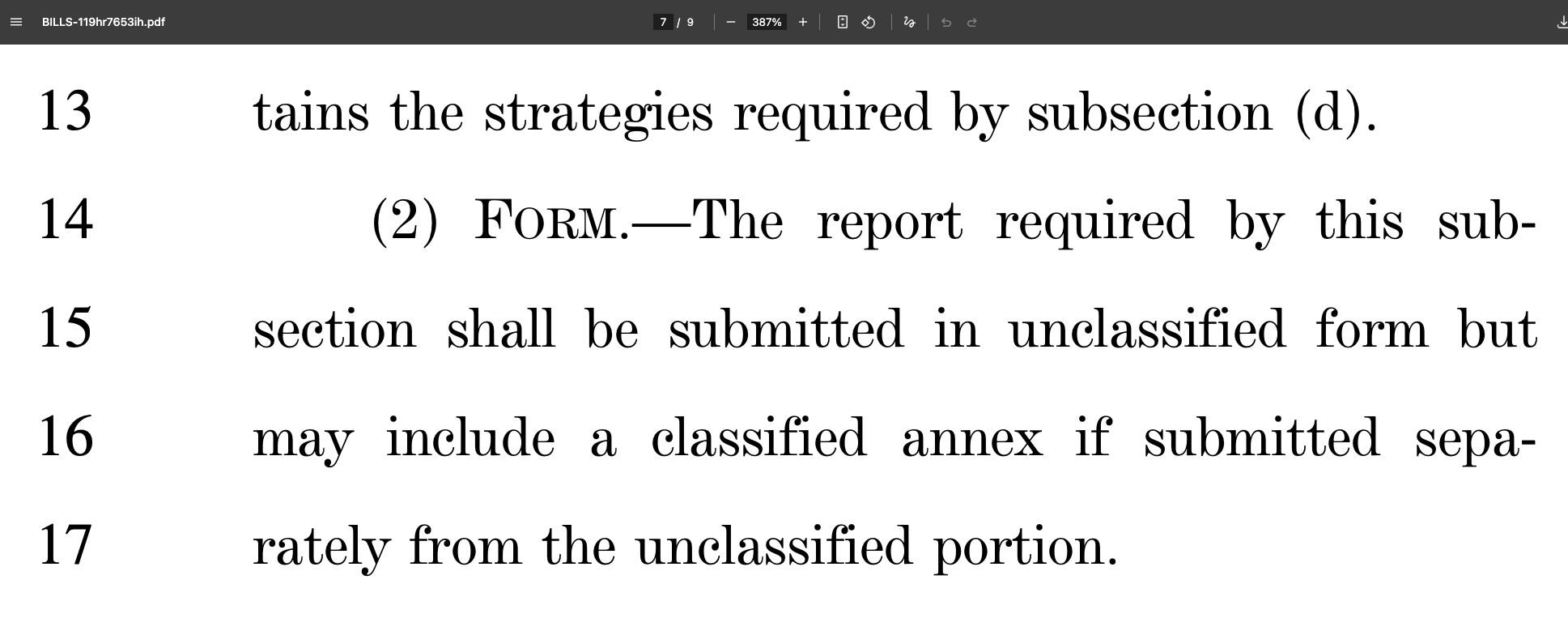
This means NATO biotechnology planning, threat assessments, and deployment strategies involving genetic engineering and biological countermeasures could be withheld from public disclosure.
Because classified annexes are not released publicly, decisions involving the development, deployment, and coordination of these technologies could occur entirely outside public view.
The legislation directs the Secretary of State to: “advance United States foreign policy goals to improve cooperation in the field of international biodefense, biosecurity, and biotechnology matters with United States allies and partners.”
This formally establishes genetic engineering, synthetic biology, and biological engineering technologies as alliance-level security capabilities governed through NATO coordination.
If enacted, the bill would place these technologies inside NATO’s defense planning framework, alongside other strategic security capabilities managed at the military alliance level.
H.R. 7653 was introduced February 23, 2026, and referred to the House Foreign Affairs Committee.
It has not yet received a vote.
If enacted, the legislation would authorize NATO to develop, deploy, and govern genetic engineering and synthetic biology technologies under a classified biodefense strategy while establishing international control systems over technologies the bill itself states could enable the development of bioweapons.
For the first time, Congress has proposed legislation that would place genetic engineering and synthetic biology technologies into NATO’s classified military planning system, allowing their development, deployment, and control to be governed at the alliance level under strategies that could be withheld from public disclosure—covering the same categories of technologies the bill itself acknowledges could enable the creation of bioweapons.
Your support is crucial in helping us defeat mass censorship. Please consider donating via Locals or check out our unique merch. Follow us on X @ModernityNews.
More news on our radar
