



This post was published by Jon Fleetwood. Support him by subscribing at Substack and following at Instagram / X / Facebook.

An Iowa Senate subcommittee has advanced a bill that would make it a felony to intentionally attempt to alter the weather in the state.
The measure, Senate Study Bill 3010, moved forward Monday on a unanimous subcommittee vote and now heads to the full Senate Commerce Committee for consideration.
The proposal would prohibit geoengineering and other weather?modification activities carried out for the “deliberate” purpose of manipulating atmospheric conditions in Iowa.
Under the bill, it would be illegal to disperse chemicals, electromagnetic radiation, sound waves, light, or other substances or forces into the atmosphere with the intent to change temperature, precipitation, or other weather patterns.
The legislation specifically lists cloud seeding as a banned practice and references “polluting atmospheric activity” and “weather engineering” as covered conduct.
Violations would be classified as a Class D felony, punishable by up to five years in prison and a fine between $1,025 and $10,245 under Iowa law.
Each day a violation continues would be treated as a separate offense, potentially multiplying penalties for ongoing operations.
The bill also forbids the use of unmarked or unidentified aircraft or other vehicles or facilities to carry out prohibited activities.
Supporters of the measure said they were responding to growing public concern about geoengineering and attempts to manipulate weather, including claims often associated with so?called “chemtrails.”
Per The Iowa Capital Dispatch:
Sen. Charlie McClintock, R-Alburnett, who introduced the Senate bill, said the measure was “the most compact version and the most reasonable version we could put together” to address some constituents’ concerns about cloud seeding and other alleged weather-altering methods.
For now, the bill remains at an early stage in the legislative process.
It must clear the full Senate committee, pass both chambers of the Iowa Legislature, and secure the governor’s signature before becoming law.
Why Similar Bills in Other States Have Failed
Tennessee, Florida, and Louisiana have already signed similar bills into law.
They have not been successful in stopping sun- and sky-blocking aircraft emissions in their states.
This could be because the bills, like Iowa’s proposed legislation, use qualifying words like “deliberate” and “intentional” to describe the weather-modifying activities they prohibit.
It is true that explicitly intentional weather modification activities do exist.
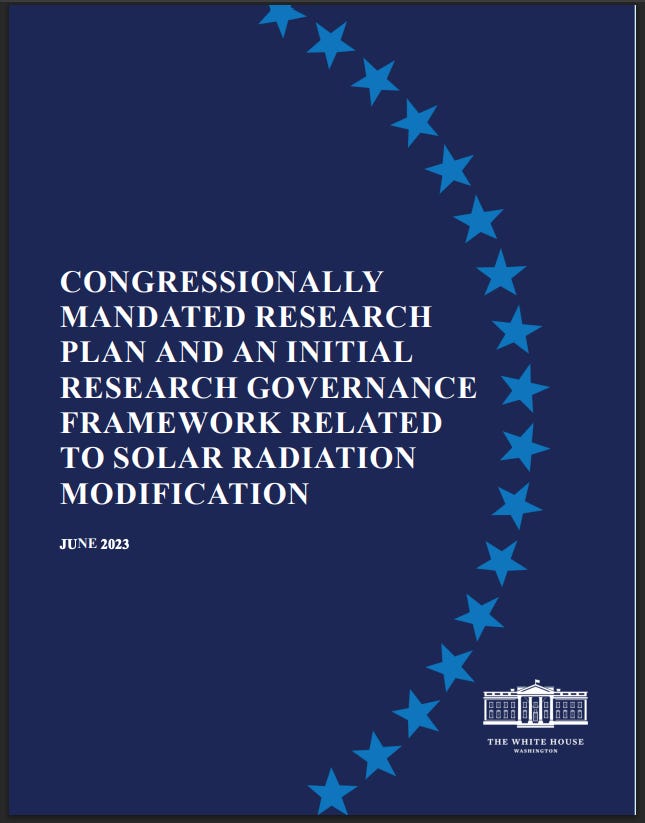
In June 2023, the White House Office of Science and Technology Policy (OSTP) released a congressionally mandated report suggesting that both global and regional intentional geoengineering projects are being carried out “covertly,” without citizens’ knowledge.
Page 43 of the document confirms the U.S. government “conducts or funds limited research into solar radiation modification.”
There are also small-scale, explicitly intentional weather-modifying projects like Augustus Doricko’s Rainmaker operation, which uses drones to release silver iodide into clouds.
However, the vast majority of weather-modifying aircraft emissions come from commercial aircraft, according to top U.S. agencies.
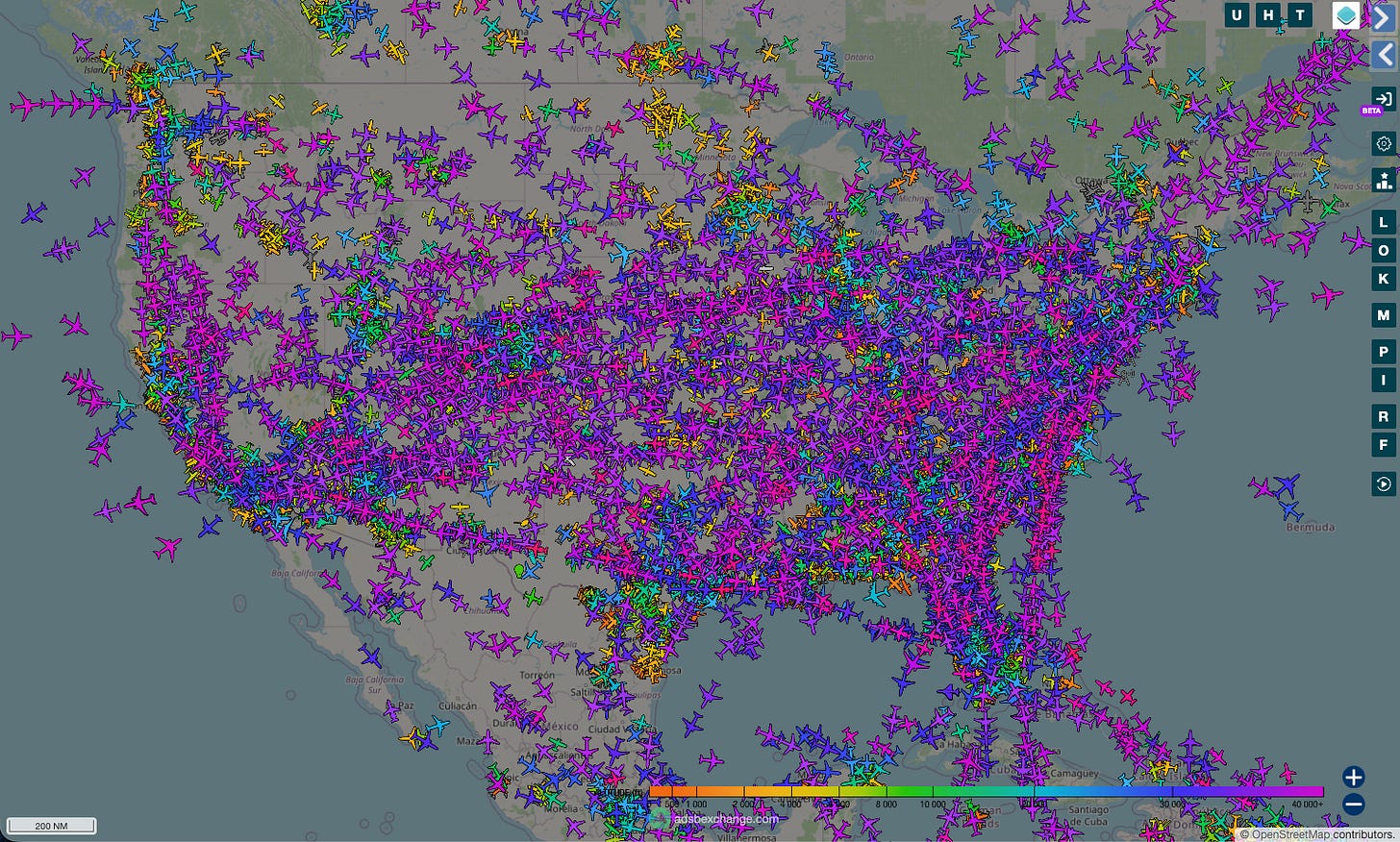
On any given day, around 3,500 to 5,500 commercial flights are typically airborne over the U.S. airspace at any moment.
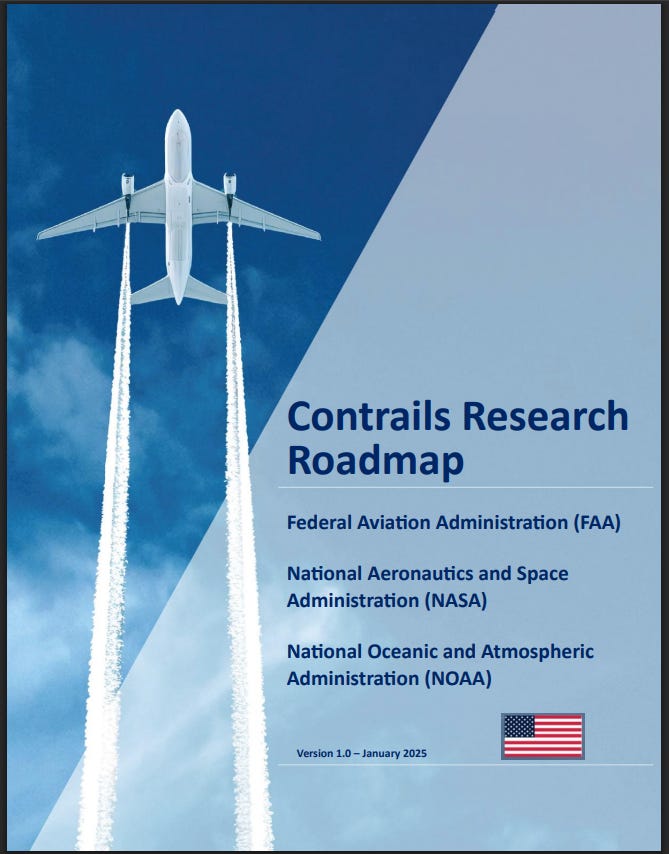
The FAA, NASA, and NOAA have officially and explicitly confirmed in print that jet airplanes—including commercial jets—create emissions that linger in the sky and alter the weather.
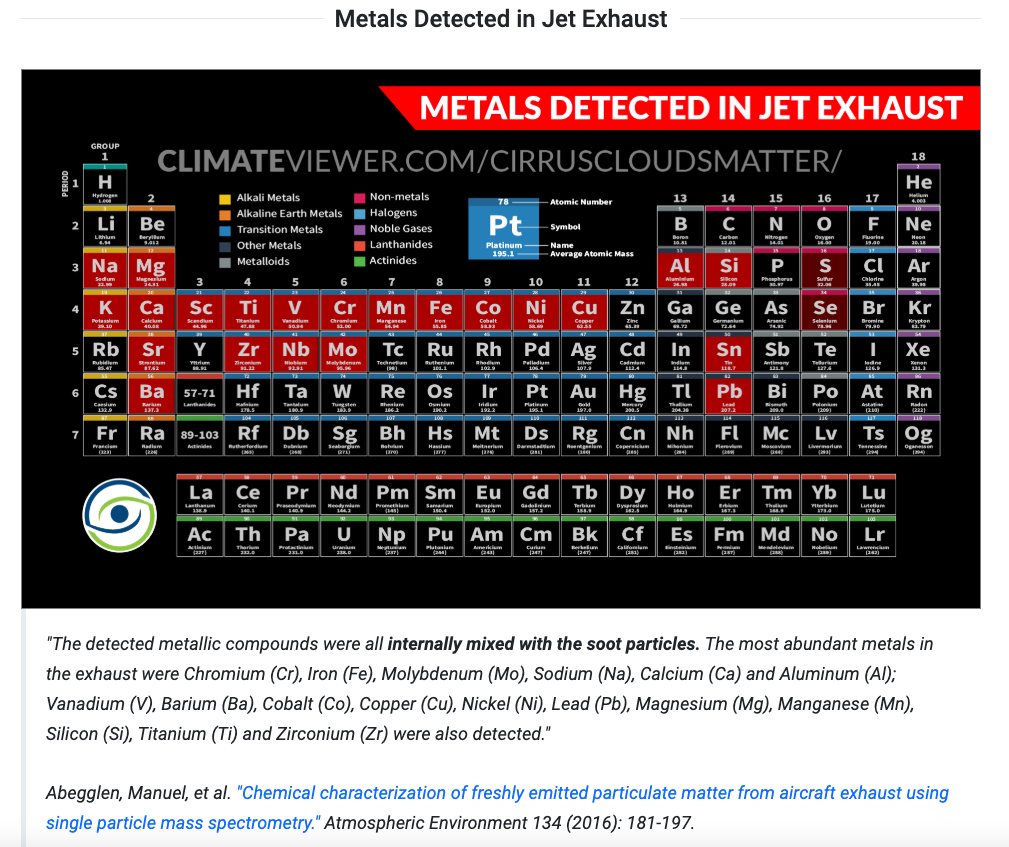
- These metal nanoparticle- and sulfur-laced contrails from jets “form in ice supersaturated regions of the atmosphere and can last for hours to days,” according to the three U.S. agencies.
- They “are characterized by their tendency to widen and spread, eventually covering areas that can span several hundred kilometers.”
- Because of their long lifespan and massive coverage area, these jet emissions are “likely to have the most significant impact on the atmosphere.”
- The government openly states that “contrail cirrus can be difficult to distinguish from naturally occurring cirrus clouds.”
But airlines do not state that their weather-modifying emissions are for the “intentional” or “deliberate” purpose of altering the weather.
So the Iowa bill—like those in Tennessee, Florida, and Louisiana—does not address what the FAA, NASA, and NOAA admit “have the most significant impact on the atmosphere”: the incidental (or “accidental”) weather modification already occurring through routine commercial aviation, which remains completely exempt because it is not legally defined as “intentional” or “deliberate” geoengineering.
All opponents of geoengineering welcome the legislation, but in its current form, it does not target the federally confirmed cause of large-scale weather manipulation already underway.
Your support is crucial in helping us defeat mass censorship. Please consider donating via Locals or check out our unique merch. Follow us on X @ModernityNews.
More news on our radar
